



Gemcitabine Hydrochloride API: Formulation & Sourcing Guide
Gemcitabine Hydrochloride API, CAS 122111-03-9, pyrimidine antimetabolite, alpha-anomer impurities, parenteral formulation raw materials, oncology API supplier, Shaanxi Sunrise
Content
Workshop Technical Memo & Upstream Sourcing Dossier (2026/2027)
Shaanxi Sunrise Pharmaceutical Co., Ltd. operates strictly as an upstream chemical synthesis facility and primary bulk manufacturer of standardized active pharmaceutical ingredients (APIs). This workshop technical memo regarding Gemcitabine Hydrochloride API (CAS: 122111-03-9) is written specifically for parenteral formulation engineers, QA auditors, and clinical oncology procurement directors. We supply bulk primary raw materials exclusively; we do not manufacture, package, or distribute finished clinical parenteral dosage forms to retail markets.
Inside the Reaction Kettle: Why Stereocontrol and Alpha-Anomer Suppression Dictate the Commercial Success of Gemcitabine Hydrochloride API
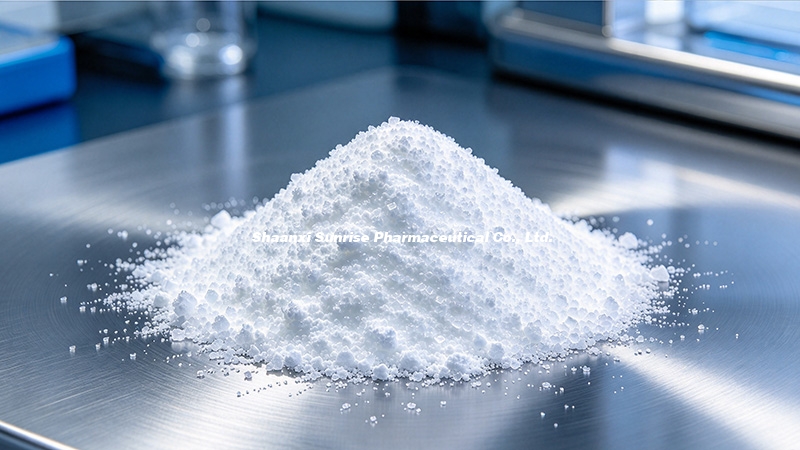
Step into any sterile fill-finish suite and ask the formulation engineers about their biggest nightmare. They will likely tell you it’s watching a high-value batch of parenteral antimetabolites precipitate and turn milky in the final filtration stage. A Certificate of Analysis (COA) might look flawless at a glance, but if the underlying crystal lattice is hiding unpurified stereoisomers, your entire stability protocol is doomed before it even begins.
At the primary API synthesis facility of Shaanxi Sunrise Pharmaceutical Co., Ltd., we manufacture C9H11F2N3O4·HCl by the metric ton. We don't deal in retail finished vials. Our sole mandate is engineering bulk crystalline raw materials that effortlessly surpass European Pharmacopoeia (EP 11.0) and USP benchmarks on the very first QA injection. Why do trace alpha-anomers cause sudden precipitation in commercial IV bags? How does the gem-difluoro structure give this molecule its lethal advantage against hypoxic pancreatic tumors? Let’s open the lab logs and break down the chemical realities.
The Fluorine Shield: Outsmarting Plasma Deamination in Dense Tumors
Drop natural deoxycytidine directly into the human bloodstream, and it fails almost instantly. Plasma cytidine deaminase enzymes violently strip its amino group away, reducing it to an inactive uridine byproduct long before it reaches the tumor microenvironment.
Synthetic chemistry bypasses this catastrophic failure point by anchoring two fluorine atoms at the C-2' position of the ribose ring. This gem-difluoro substitution fundamentally shifts the electron density, erecting a formidable steric shield around the glycosidic bond. The deaminase enzymes are physically repelled. Consequently, Gemcitabine Hydrochloride circulates in systemic plasma long enough to infiltrate dense, hypoxic tumor cores—arming clinical oncologists with a highly stable weapon against aggressive pancreatic and thoracic cancers.
The Double-Tap Mechanism: RNR Inhibition and Masked Chain Termination
Once the API breaches the cancer cell membrane via specialized nucleoside transporters, intracellular kinases swiftly phosphorylate it into its active diphosphate (dFdCDP) and triphosphate (dFdCTP) derivatives. This triggers a cascading biochemical collapse:
Ribonucleotide Reductase (RNR) Starvation: The diphosphate metabolite fiercely binds to ribonucleotide reductase, paralyzing the exact enzyme responsible for synthesizing new deoxynucleotides. The cancer cell is rapidly starved of the raw materials needed for DNA repair.
Masked Chain Termination: Simultaneously, the triphosphate metabolite sneaks into the actively elongating DNA strand. Once embedded, DNA polymerase manages to add just one more normal nucleotide before freezing completely. The terminal fluorine atoms effectively "mask" the structural error, rendering the cell's proofreading enzymes blind and incapable of excising the sabotage. The replication fork collapses, forcing the malignant cell into rapid apoptosis. Furthermore, the drug exhibits "self-potentiation," biochemically inhibiting its own degradation to prolong its intracellular strike.
Clinical Deployment Across Major Solid Tumor Pipelines
Formulation scientists and clinical trial directors integrate our high-purity Gemcitabine API into several critical oncology regimens globally:
Pancreatic Adenocarcinoma: Serving as the established first-line benchmark for advanced pancreatic malignancies, gemcitabine-based regimens deliver measurable survival and palliative benefits where standard alkylating agents simply cannot penetrate.
Non-Small Cell Lung Cancer (NSCLC) & Bladder Carcinomas: When paired with platinum compounds (such as cisplatin), gemcitabine disables nucleotide excision repair while the platinum induces DNA cross-linking. This synergistic destruction is a cornerstone in thoracic and urological oncology.
The Stereochemical Trap: Why Alpha-Anomers Destroy Commercial Viability
This is exactly where low-cost synthesis processes expose their fatal flaws. During the industrial condensation of the nucleobase, sloppy chiral control inevitably spawns unwanted alpha-anomer stereoisomers right alongside the therapeutically active beta-anomer.
CRITICAL PARENTERAL QUALITY ALERT (ALPHA-ANOMERS)
Alpha-anomer impurities possess zero anti-tumor activity. Worse, they act as the primary catalyst for unexpected reconstitution clouding and elevated neurotoxicity in the final IV bag. Shaanxi Sunrise deploys proprietary chiral chromatography columns to aggressively compress alpha-anomers strictly below 0.15%, guaranteeing crystal-clear solubility and uncompromising patient safety.
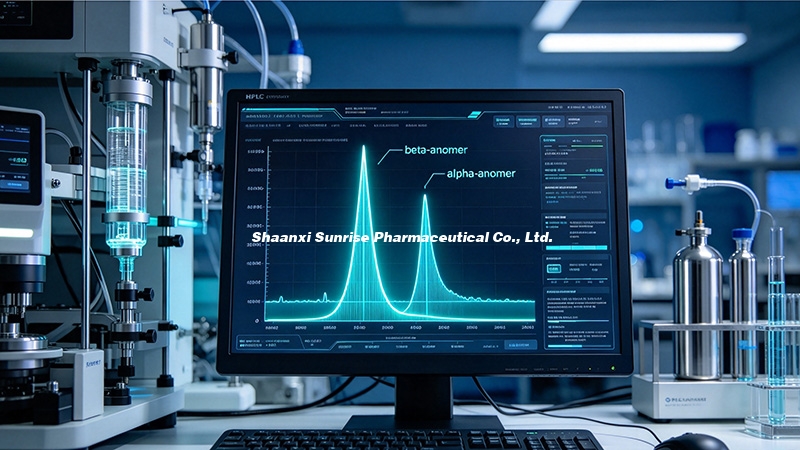
By locking unknown impurities below 0.05% and enforcing a brutal bacterial endotoxin ceiling of 0.10 EU/mg, we eliminate the chemical variables that cause commercial parenteral lines to fail audits.
Analytical & Chromatographic Specification Dossier (EP/USP vs. Sunrise)
| Analytical Parameter | EP / USP Monograph Standard | Shaanxi Sunrise Audited Specification |
|---|---|---|
| HPLC Assay Purity (Dried Basis) | 98.0% – 102.0% | ≥ 99.50% (HPLC-UV) |
| Individual Unspecified Impurity | ≤ 0.10% | ≤ 0.05% |
| Alpha-Anomer Isomer | ≤ 0.50% | ≤ 0.15% |
| Water Content (Karl Fischer) | ≤ 1.0% | ≤ 0.5% (Anhydrous Crystalline) |
| Heavy Metals (ICP-MS) | ≤ 20 ppm | ≤ 10 ppm |
| Bacterial Endotoxins | ≤ 0.25 USP Endotoxin Units/mg | ≤ 0.10 EU/mg (Chromogenic LAL) |
🔗 Audit complete batch chromatograms, residual solvent scans, and physicochemical dossiers: Examine the Standardized Gemcitabine Hydrochloride API Technical Dossier.
Why Top Injectable Formulators Rely on Shaanxi Sunrise
We are strictly an upstream API manufacturer. When sterile fill-finish plants across North America, Europe, and Asia require a Gemcitabine Hydrochloride API (CAS: 122111-03-9) that clears rigorous regulatory audits on the first pass, they lock in contracts with us for three non-negotiable reasons:
A. Unyielding Isomeric Purity & Assay (≥ 99.50%)
We verify every commercial drum via automated preparatory HPLC to guarantee a minimum assay of 99.50%. By capping alpha-anomers rigidly at 0.15% and ruthlessly purging residual genotoxic solvents, we provide complete formulation predictability.
B. Deep Vacuum Stripping & Defense Packaging
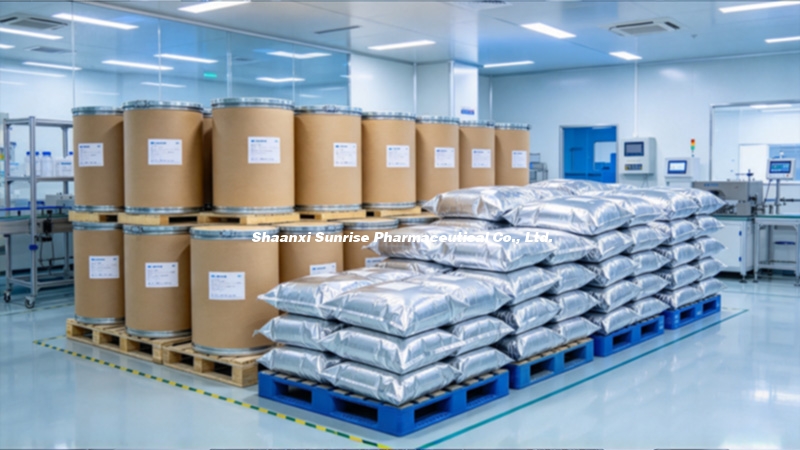
We dehydrate our crystalline powder under deep vacuum and inert nitrogen. It is then sealed inside double-layer, pharmaceutical-grade antistatic LDPE bags with silica desiccants, packed securely in rigid 25 kg export fiber drums to guarantee a rock-solid 36-month retest date.
C. Pure B2B Upstream Alignment
We never formulate finished retail drugs to compete with our clients. Our technical QA teams exist solely to support your bioburden validation, stability protocols, and DMF (Drug Master File) preparations.
Authoritative Academic & Pharmacopeial References
National Center for Biotechnology Information (NCBI) / PubChem Database. Compound Summary for CID 60751 - Gemcitabine Hydrochloride (Pharmacology, Ribonucleotide Reductase Inhibition and Pyrimidine Structure).
https://pubchem.ncbi.nlm.nih.gov/compound/Gemcitabine-hydrochlorideAmerican Cancer Society (ACS). Gemcitabine: Clinical Protocols, Pancreatic Cancer Regimens, and Side Effect Management Guidance.
https://www.cancer.org/cancer/managing-cancer/treatment-types/chemotherapy.htmlWorld Health Organization (WHO). WHO Model List of Essential Medicines — Cytotoxic and Adjuvant Medicines Section (Gemcitabine API).
https://www.who.int/groups/expert-committee-on-selection-and-use-of-essential-medicinesJournal of Clinical Oncology (ASCO Publications). Gemcitabine-Based Combination Chemotherapy in Advanced Non-Small Cell Lung and Pancreatic Carcinoma.
https://ascopubs.org/journal/jcoEuropean Pharmacopoeia (Ph. Eur. / EDQM). Monograph Standards for Gemcitabine Hydrochloride API (CAS 122111-03-9) — Chromatographic Purity and Isomer Control.
https://www.edqm.eu/en/european-pharmacopoeia-ph-eur-11th-edition
Technical Formulation Engineer & Procurement FAQ
1. Why should our QA lab demand Shaanxi Sunrise's ≥99.5% spec over the standard 98.0% monograph?
Monographs permitting up to 0.50% alpha-anomers introduce unacceptable risks for high-concentration infusions, risking particulate formation and unpredicted toxicity. Our ≥99.50% baseline provides tighter solubility curves, eliminates milky precipitates, and ensures stress-free regulatory filings for your finished drug product.
2. What is the aqueous solubility and pH profile of your Gemcitabine Hydrochloride API?
Gemcitabine Hydrochloride (CAS 122111-03-9) is highly hydrophilic, dissolving easily past 20 mg/mL at room temperature. Its natural acidic pH (2.5 - 3.5) in sterile water ensures vital structural stability prior to final clinical dilution in saline or dextrose IV bags.
3. What are your bacterial endotoxin limits for this injectable API?
Oncology injectables tolerate zero microbiological errors. We utilize validated Chromogenic LAL Endotoxin assays. Our release ceiling is rigidly locked at ≤0.10 EU/mg, easily outperforming standard international parenteral monographs to guarantee patient safety.
4. How does Gemcitabine achieve intracellular "self-potentiation"?
The drug actively defends itself inside the cancer cell. Gemcitabine metabolites biochemically inhibit the exact deamination enzymes that attempt to degrade them. This built-in self-preservation extends its intracellular half-life, maximizing the cytotoxic strike against the tumor.
5. How is your API packaged to prevent moisture uptake?
After deep vacuum dehydration, the crystalline powder is sealed inside double-layer antistatic, pharmaceutical-grade LDPE bags with silica desiccants. These are nested securely inside rigid 25 kg export fiber drums. When stored properly in a climate-controlled warehouse, it maintains total chemical integrity for 36 months.
Partner with Shaanxi Sunrise for High-Purity Gemcitabine API
Do not let isomeric impurities, residual genotoxic solvents, or parenteral compliance hurdles delay your oncology pipelines. Source audited, GMP-aligned Gemcitabine Hydrochloride API (CAS: 122111-03-9) directly from Shaanxi Sunrise Pharmaceutical Co., Ltd.
Request Complete COA & Commercial Quotation